When Ben Goodwin talked to Fortune in December 2023, he was still making Olipop flavors in a lab in his laundry room. His day might start with a sauna and a cold plunge, but the work he described was familiar to anyone trying to build a product around a full calendar. He spent much of the day in meetings and worked on formulas when time opened up. On some nights or weekends, that meant returning to the lab at home.
The $200 million figure from that interview was Goodwin’s forecast for Olipop’s 2023 revenue. It gives a sense of the scale he expected at the time. An estimate made in December 2023 is a different figure from the company’s reported revenue for a completed year. The amount Goodwin personally earned would come from a separate record.
The beverage work came first
Goodwin traces his interest in food and digestion to changes he made to his own diet as a teenager. It’s his account of what drew him to the work. His first beverage ventures came before Olipop, with work on kombucha and then a water kefir drink. Those products gave him experience with formulation before he and David Lester started Olipop.
That history helps explain why the laundry room mattered. Goodwin was still developing recipes even after the work of running the company had come to include calls and meetings that could fill most of the day. He told Fortune in 2023 that he often worked through a formula in his head before he tested it. He also described tasting a sample, setting it down and seeing if he reached for it again. It was his own test for whether a flavor was close to what he wanted.
A founder can decide whether a draft recipe tastes like the drink he had in mind. Once the soda is in stores, the questions are different. A can needs to fit the space the retailer has available and the price a customer is willing to pay. A person who buys a single can to try the flavor faces a different decision when there’s a whole case on sale. Goodwin’s account explains how he approached the recipe. It leaves those retail decisions open.
The business had a different number in 2025
In February 2025, Davis Wright Tremaine, which identified Olipop as a client, said the company had raised $50 million at a $1.85 billion valuation. It identified Growth Equity Partners, part of J.P. Morgan Private Capital, as the round’s lead investor. That is a dated financing figure. It tells you the value reported for the company in that transaction and how much money the company raised in the round.
Those two figures describe different parts of the deal. The $50 million is the financing amount. The $1.85 billion is the company valuation reported alongside it. Neither answers what the company sold over a calendar year. For that you need sales or revenue figures for the period you’re comparing. You would need separate earnings information to say how much of that revenue the business kept after paying expenses. Goodwin’s 2023 estimate and the later funding round belong on different lines if you’re trying to track the business over time.
The distinction matters for a private company because an interview, a funding disclosure and a product page answer different questions. An interview can show how the founder describes the work. A financing announcement can tell you what happened in that deal. A product page can show how the company labels a particular can today. The dates are just as useful as the numbers, especially if you remember a headline about the brand from a few years ago.
Why the same flavor can show up in two aisles
Look at Vintage Cola. Olipop lists a 12-ounce version with nine grams of dietary fiber that should be kept in the fridge. The company also sells a six-gram Vintage Cola that can be stored in a cool, dry place. The name is the same on both. The fiber amount and storage instructions tell you which one you have.
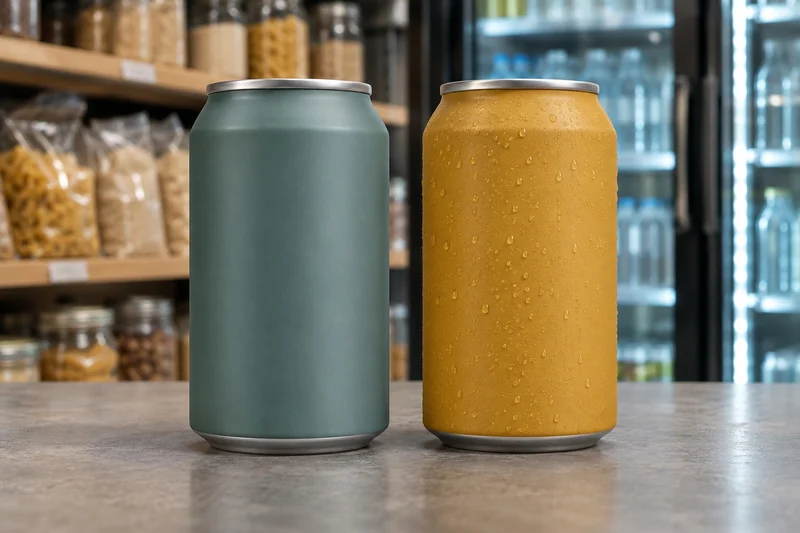
That difference affects where a store can put the product. A refrigerated can competes for space in a cooler. A shelf-stable can can sit in a dry grocery aisle, and a shopper buying a case can put it in a cupboard and chill a couple of cans at a time. The labels are also a reason to compare the same version when you’re looking at prices. If a case is listed online and a single can is in front of you at the store, check the number of cans, how much each holds and which recipe the offer covers.
Both formulas list 50 milligrams of caffeine in a 12-ounce can. The nine-gram formula lists five grams of total sugars and the six-gram formula lists four. Both list two grams of added sugars. If you’re comparing cans for a specific reason, use that line on the Nutrition Facts panel. The name on the front doesn’t tell you which fiber blend is in the can, and the amount of fiber alone doesn’t establish a health outcome.
Take a hypothetical $2.50 single can and a $24 case of 12. The case comes to $2 a can before any shipping charges. The single can costs less upfront and lets you try the flavor without committing to the rest of the case. If you already buy the drink regularly, compare the delivered case price with what you usually pay at the store. Once you account for the cans and any delivery charge, you can see whether the case saves you money. The same unit-price comparison works for larger grocery packs.
Goodwin’s interview gives you a dated look at how one founder spent his time. The funding round shows a later point in the company’s finances, and the two Vintage Cola labels show where shoppers can look for the different versions. If you’re weighing a purchase, the can in front of you gives you the information that matters for that decision. Start with the label and the price you’d pay today.