
When an employer asks to change approved leave, flights and accommodation may already be paid for. A 2024 TikTok post presented messages about a boss changing an employee's trip after a colleague resigned. The screenshots don't establish the workplace's jurisdiction or settle anyone's legal rights. Before changing your own plans, find out which commitments are fixed and what you would lose.

Keep the approval and the new request

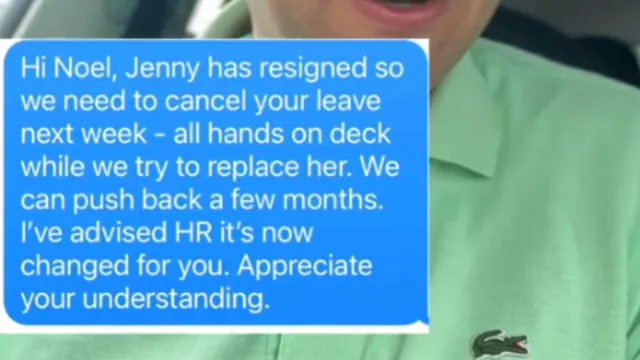
In the archived exchange, a message attributed to the boss says the leave has been changed and HR informed. For your own situation, save the original approval, the requested dates and the later instruction. Record who approved the time and when. Keep copies somewhere you can access if your workplace account becomes unavailable, without taking confidential business records that aren't yours to keep.
Find the terms that apply to your job
Read the leave policy, employment agreement and any applicable union agreement. Look for cancellation provisions, notice requirements and who can approve a change. For U.S. readers, the Labor Department's FLSA guidance says that law doesn't require vacation pay. That limited federal rule doesn't determine every state-law or contractual obligation, or give a complete answer about revoking an approval.
Check what kind of leave is involved
Ordinary vacation and leave protected for a qualifying medical or family reason can involve different rules. Start by identifying the leave you actually requested and the policy that covers it. If you're unsure which rules cover your circumstances, ask HR to identify the policy it is relying on and consider advice from your union or a qualified local adviser.
Put a number beside each booking

Make a list of flights, rooms, transfers, activities and deposits already paid. Beside each amount, note the refund conditions and the deadline for changing it. Check every traveler affected, not only the employee being asked to return. A family member's ticket or shared room can remain a cost even if one person's booking can be changed.
Separate cash refunds from credits

Suppose a hypothetical cancellation affects $1,800 in prepaid flights and $900 in prepaid accommodation. If $200 in cancellation charges are added and only $500 is refunded in cash, the potential cash loss is $2,400. These are examples, not quotes or an employer's bill. List travel credits separately, including their expiry and restrictions, rather than assuming they are the same as cash returned.
Explain the fixed commitments

The archived messages describe a brother's wedding in Bali, paid flights and children taking part in the ceremony. Those are claims in the presented exchange, not bookings independently checked for this article. In your own written response, identify commitments that cannot simply move to another month. Give dates and documented costs rather than relying on an argument about how frustrating the request feels.
Ask about reimbursement explicitly

Send the cost summary to the person requesting the change and ask which expenses the employer proposes to cover. Ask how payment would work and when it would arrive. Get any agreement in writing before relying on it. The fact that a manager has asked you to alter a trip doesn't, by itself, establish a reimbursement entitlement or the amount you would receive.
A shorter trip needs a new calculation

Another archived message proposes cutting three weeks to a three-day visit. A shorter stay can still require new fares, extra transfers or changes for relatives. Compare an actual alternative itinerary with keeping the original booking. Include the time needed to travel as well as the event itself, so an apparently small scheduling change doesn't hide a much larger disruption.
Read the insurance wording before claiming

The NAIC warns that travel cancellation coverage can exclude a work obligation. Check your policy's covered reasons, exclusions, deadlines and evidence requirements before assuming it will pay. Broader cancel-for-any-reason coverage also has conditions and usually returns less than the full trip cost. Ask the insurer to explain how the wording applies; a policy name alone doesn't promise a refund.
Discuss coverage without accepting the change
If you can offer a handover or extra preparation before the original leave starts, spell out what is realistic. Ask who will cover the work while you're away and what the revised request would change. Keep an offer to help distinct from agreement to cancel. Confirm the outcome of a conversation by email so both sides have the same dates and expectations.
Resolve attendance before changing it yourself

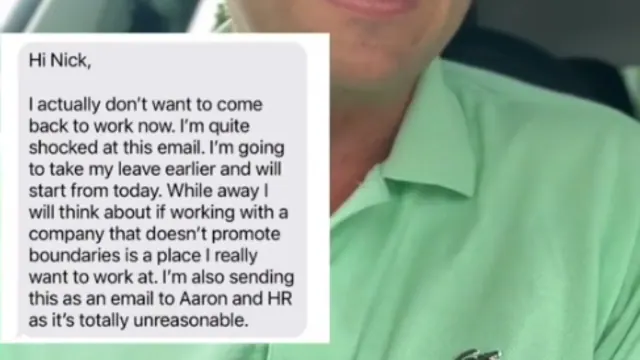
The final archived message says the employee will start leave early. Before changing your own attendance, obtain advice on your agreement and the rules where you work. Keep the approval, new instruction, booking terms and cost summary together. Those documents give HR, a union representative or a local adviser something specific to review while you ask for a written resolution.