What waiting changes
Two spouses can reach retirement with different work records and different reasons to start Social Security. One may have stopped working and need money for the mortgage this month. The other may still have a paycheck and room to wait. Claiming early usually means the monthly check is smaller than the worker would receive at full retirement age. Delaying after full retirement age can raise the worker’s monthly amount. Staying on the job can also change the benefit calculation if new earnings replace a lower year in the worker’s highest 35 years. Those are separate effects. A couple comparing dates wants to know which change is responsible for the difference in its estimates.
Money described one arrangement some couples consider. The lower earner begins drawing a retirement benefit first, bringing in something while the higher earner waits. The higher earner’s larger eventual retirement benefit may also support a larger survivor benefit. That possibility matters most when the household considers how much income would remain for one person. Keep the need for cash now in the calculation. A couple that cannot cover rent, groceries or insurance during the gap faces a different question from a couple whose wages or savings can carry those bills.

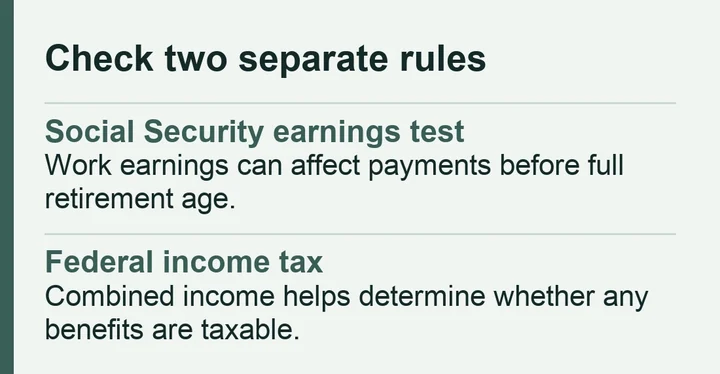
The Social Security Administration lists two earnings limits for 2026. Someone who is under full retirement age for the entire year can have $1 in benefits withheld for each $2 above $24,480. Someone who reaches full retirement age this year can have $1 withheld for each $3 above $65,160, counting only earnings before the month they reach that age. From that month on, the retirement earnings test stops applying. The agency can recalculate the monthly benefit at full retirement age to give credit for months when payments were reduced or withheld because of excess earnings.
Income taxes are a separate calculation. For a rough federal check, the IRS uses combined income: adjusted gross income, non-taxable interest and half of Social Security benefits. Part of the benefit can enter taxable territory above $25,000 for a single filer or $32,000 for a married couple filing jointly. The portion that counts as taxable income can be as much as 85 percent at higher income levels. A cost-of-living adjustment can add to the monthly payment and change the tax calculation if other income stays the same.
How the timing can look at home
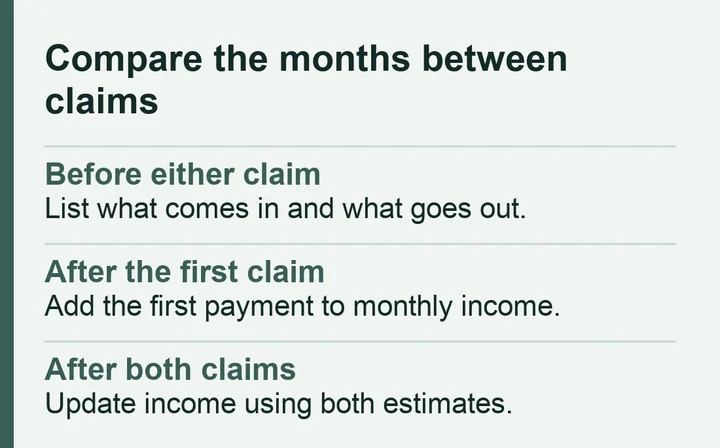
Imagine one spouse is working through the end of the school year and the other has already left work. In the first version of the budget, the retired spouse files this winter and the working spouse waits. Write down the amount the first payment would actually contribute and list the bills the household expects before the later payment starts. Health premiums and property taxes deserve their own lines. When a bill comes due only once or twice a year, the month it lands can matter just as much as the annual total.
Next, put the dates side by side. What does the household receive if both claim near the same time? What comes in during the months between claims if only one files? Do those dates depend on one spouse keeping a job for longer than planned? Writing down the answers makes it easier to see where savings would have to fill a gap and how long that gap might last. A larger benefit later can live in the same budget as a very real shortage next winter.
A worker who expects an irregular year should also check which earnings rule applies. A retirement date and the month someone reaches full retirement age can fall far apart. Add up earnings before that birthday month for the year the worker reaches full retirement age. For a worker who remains below full retirement age all year, use the applicable full-year threshold. These calculations address what the agency may withhold from the benefit while someone is working.
The original reporting points out another distinction: pensions, annuities, interest and investment income are outside the retirement earnings test. Some of those amounts may still matter for income taxes. A household can put wages in one row for the earnings test and then work through the IRS calculation separately. If one retirement-income number includes dividends or a pension, bringing the whole number into the earnings test would change the result for the wrong reason.
The monthly amount from Social Security and the amount a household can spend answer different questions. Put the estimated benefit next to the payroll it would replace and the other income already in the budget. Look again when an annual cost-of-living adjustment lands or a spouse changes hours. Those are good moments to compare the coming year with the last one, especially if the household was already near an income threshold.
Run the budget on one income, too
A couple weighing two start dates also has a third budget to look at: the one either spouse would have to live on alone. Begin with the expenses that would continue, such as housing, insurance, regular bills and the cost of getting around. Then write the income sources that might remain beside those expenses. Two cars may become one. The mortgage, the furnace and the next property tax bill could still be there. That exercise helps show why the larger benefit matters separately from the amount the couple would receive together.
Try the same comparison with a shorter stretch between claims. If the higher earner plans to wait two years but the household only has room for one season without a paycheck, note that month in both budgets. The decision looks different when the smaller check covers recurring bills and the gap comes from a few large expenses. A sheet arranged by month makes those expenses easier to see than an annual average. This also gives both spouses a concrete reason to revisit a date if work ends earlier than expected.
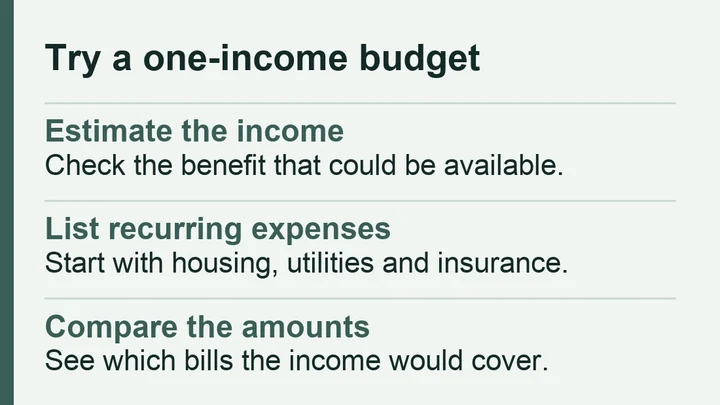
Keep the estimate and the budget in separate columns. The household can see what those amounts would need to cover. When those columns show an uncomfortable gap, the useful question is which month is hardest to get through. That month can tell a couple more about the trade-off than a large estimate printed next to a single retirement date.