A $700 million contract sounds like a fairly simple number until you ask when the money arrives. Shohei Ohtani signed his Dodgers deal in December 2023, with most of the salary deferred. If you're trying to understand the deal, those dates tell you more than dividing the headline total by ten.

When does he get paid?
The St. Louis Fed's October 2024 explanation gives the schedule: $2 million a year from 2024 through 2033, then $68 million a year from 2034 through 2043. The later payments carry no interest. That's $20 million in the first decade and $680 million in the next. Add them together and you reach the familiar $700 million.

Where the $70 million average comes from
You can divide $700 million by the ten-year contract and get $70 million a year. Just keep the schedule beside that calculation: neither decade pays that annual amount. Write down how much arrives in each period before deciding what an average means for your own cash flow.

What would future money be worth today?
That's the question a present-value calculation tries to answer. You choose a discount rate and translate future payments into an amount at a particular date. Change the rate or payment dates and the answer can change too. The resulting figure is a calculation, with its own purpose, rather than an extra payment.
Work through $250 first
Here's a smaller version. Let $250 earn a hypothetical 4% for one year, without fees or taxes, and you'll have $260. Reverse the calculation: $260 divided by 1.04 is $250. That's the present value of $260 due a year from now at that rate. This isn't a promised return.

What inflation can change
A fixed dollar payment stays the same size even if prices rise while you're waiting for it. In that situation, it buys less. Inflation describes a general increase in prices over time. You'd need more assumptions to say what prices will look like in 2034, or what Ohtani himself will buy with those later payments.
Baseball has a separate calculation
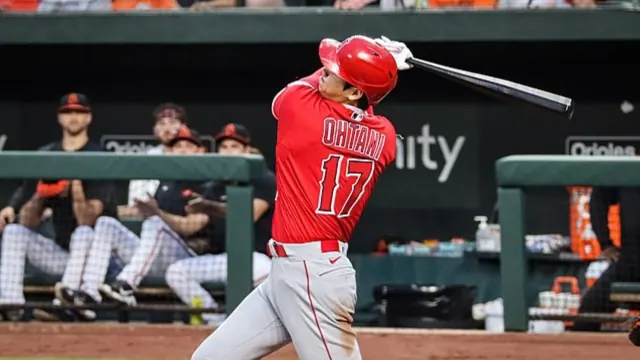
The league needs a way to count deferred pay for its Competitive Balance Tax. The 2022–2026 Basic Agreement specifies when to use present value and when to use stated value. Keep that payroll accounting question separate from the payment schedule. It also won't tell you the player's take-home income; that asks a different question again.

The club still has to fund the promise
Article XVI permits deferred compensation without limiting its amount or its share of total compensation. It also sets funding requirements for clubs. So the amount paid directly to a player during an early season isn't the whole picture of the team's obligations. Setting money aside to fund later pay and actually paying the player are separate steps.

Look beyond the exchange-board photo
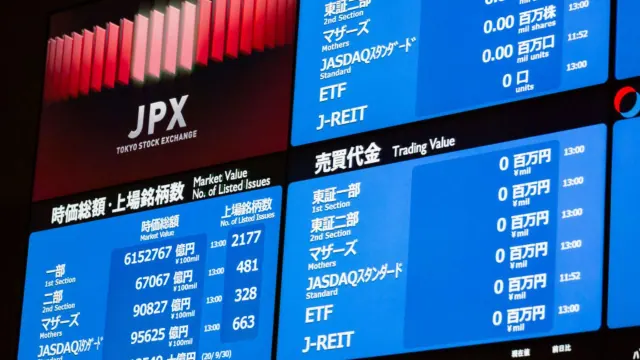
A Japanese stock-exchange photograph can illustrate a market story. It can't show you how a particular sponsor's shares performed after the signing. For that, you need the company, trading dates, prices and a suitable comparison. If the shares rose during that period, you'd still need evidence before attributing the rise to Ohtani's contract.

Check what an economic estimate measures
A regional economic forecast might concern spending across an area over a specified period. Read its date, currency and assumptions before using the number. An estimate of economic activity, a share-price return and an athlete's salary measure different things. A forecast also needs to stay labeled as a forecast until there is evidence of what actually happened.
An endorsement leaves plenty to check
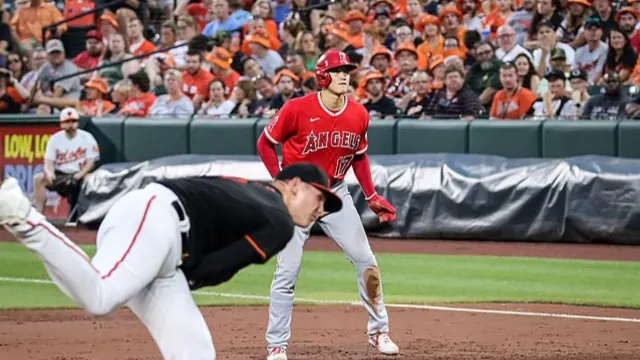
The SEC's celebrity-endorsement alert advises against investing solely because a famous person promotes something. An athlete's consumer advertisement doesn't tell you if an investment suits you. The alert also says celebrities can be linked to promotions without their consent. Verify the connection before assuming the person endorsed the opportunity.
Read about the business itself
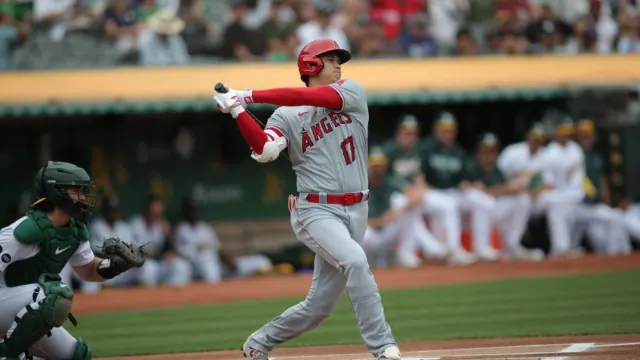
The SEC points investors toward company finances and prospects, the seller's background, and costs and risks. If your question is about compensation instead, start with the promised amounts, the dates you'll receive them and the rules governing the promise.