
A luxury watch or expensive car can look like wealth without making its owner financially secure. In a December 14, 2023 Minority Mindset video, Jaspreet Singh warned about buyers who stretched their budgets expecting resale prices to rise.
His 'fake rich' label describes that argument. It isn't a measured category of Americans or proof of a bankruptcy wave.
Buying at a Premium

Singh pointed to Rolex watches and Mercedes-Benz G-Class vehicles bought during the pandemic boom. He argued that scarce inventory had encouraged buyers to pay unusually high prices.
Paying a premium doesn't guarantee a loss, but it raises the price a future buyer must pay for you to recover your money. Financing and selling costs add to that calculation.
A Price Chart Is Not Every Sale

In the video, Singh used a WatchCharts Rolex index to illustrate a peak around March 2022 and a subsequent decline. He also showed G-Class listings from Detroit.
An index and a set of asking prices provide context. They don't establish every owner's buying or selling price. Condition and transaction costs matter too.
Spending Beyond Income
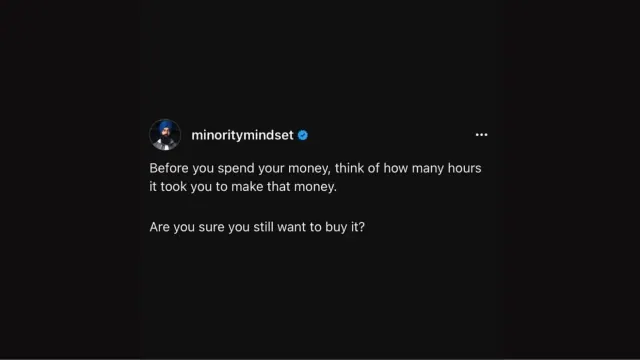
Singh's concern was spending supported by borrowing or drawing down savings rather than sustainable income. The question for a household is what remains after the regular bills and debt payments.
An expensive purchase isn't automatically irresponsible. The problem is a budget that only works if future income rises or the item can be sold for more later.
Where the Pressure Appears

A household making its payments may still have little room for unexpected expenses. Adding another obligation narrows that room further.
Singh predicted a breaking point for spending, but a prediction isn't a date on a calendar. A useful personal check is whether existing commitments remain manageable without another loan or a hoped-for sale.
Demand Can Change Prices

When buyers pull back, sellers may need to adjust prices. That doesn't mean all assets fall together or discounts follow immediately. Supply and the number of willing buyers matter too.
Someone buying a luxury item should be able to afford owning it without relying on a quick resale at a higher price.
The Car-Loan Problem

Negative equity means the car is worth less than the amount needed to pay off its loan. Selling or trading it doesn't make the gap disappear.
The CFPB advises finding out the loan payoff amount and the vehicle's trade-in value before deciding what to do. If the unpaid difference is added to another loan, the new financing becomes more expensive.
Resale Is Not Guaranteed Profit

A listing price isn't money in the bank. Before calling a purchase an investment, consider what a buyer would actually pay, along with selling fees, upkeep and any borrowing cost.
Some collectible items gain value; others don't. Enjoying a watch or car is different from depending on it to deliver a profit when you need cash.
The 2022 Rate Increase

On March 16, 2022, the Federal Reserve raised its federal funds target range to 0.25%–0.50%. Its statement cited elevated inflation and anticipated further increases.
That historical decision provides context for Singh's argument about borrowing costs. It didn't apply identically to every mortgage, credit card or car loan.
Keep the Timeline Attached

By July 26, 2023, the Fed's target range had reached 5.25%–5.50%. Those are historical figures from the period Singh discussed, not today's rates.
Higher borrowing costs can affect what buyers can afford, but existing fixed-rate loans and new financing don't respond identically. Read the actual loan terms rather than substituting a policy headline.
What a Cap Rate Measures

Singh also used commercial property to explain financing pressure. A cap rate compares annual net operating income with property value. It is calculated before debt service and isn't a guaranteed total return.
For example, $100,000 of annual net operating income on a $1 million property is a 10% cap rate. Financing, future expenses and changes in value still affect the investor's result.
A Warning, Not a Forecast to Follow

The video looked ahead to 2024 from late 2023. Its predictions should be read in that setting, rather than recycled as current investment guidance.
The warning: don't confuse an expensive possession with financial security. Check affordability and debt obligations without assuming a rising resale price will rescue the purchase. Singh's video description also states that he is not a licensed financial adviser.
Minority Mindset: original Jaspreet Singh video, December 14, 2023
Federal Reserve: March 16, 2022 policy statement
Federal Reserve: July 26, 2023 policy statement