What a Security Freeze Actually Stops
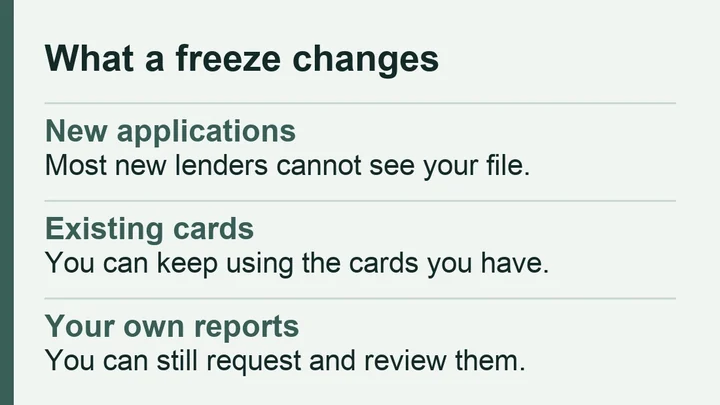
Before you file a credit application, check the freeze status at Equifax, Experian, and TransUnion one by one. CFPB says a security freeze keeps prospective creditors out of your credit file, and you can freeze or unfreeze those records for free at the three nationwide credit reporting companies. You have to contact each company separately.
The timing matters next. If you ask by phone or secure electronic means, the company must place the freeze within one business day. If you ask by mail, it has three business days after receipt. It must send written confirmation within five business days and tell you how to remove the freeze.
A freeze does not change your credit score, and you can ask for a temporary lift for the time you name. While the freeze is in place, current creditors, certain government entities such as child support agencies, companies you hired to monitor your credit file, and you can still access the file.
The limit is important. The nationwide bureaus are not the whole reporting system: other consumer reporting companies handle employment screening, tenant screening, insurance, check screening, and other decisions. If you are comparing tools, a fraud alert tells creditors to verify your identity before opening new credit or changing an existing account, and credit monitoring is a paid service that watches for changes and alerts you after they appear.
How to Place a Freeze: The Three-Company Sequence
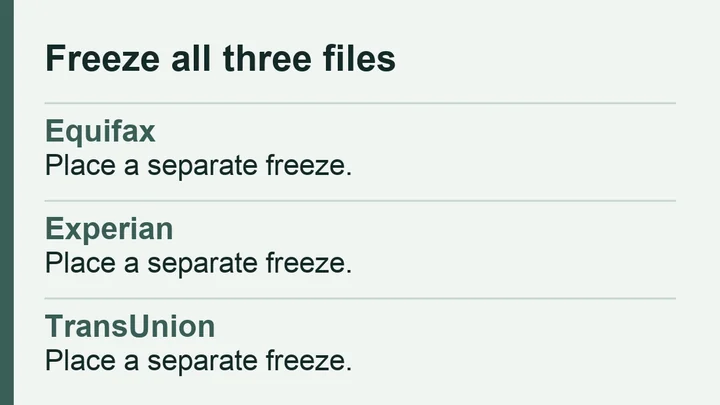
Start with one bureau website, then repeat the same step for the other two. A security freeze blocks prospective creditors from accessing your credit file, and CFPB says it is free at Equifax, Experian, and TransUnion. You have to contact each company separately, so one request does not cover all three.
How fast it takes depends on the channel. If you ask by phone or secure electronic means, the company must place the freeze within one business day. If you mail the request, the deadline is three business days after receipt. CFPB also says each company must send written confirmation within five business days and explain how to remove the freeze. A freeze does not affect your credit score.
If you are lining up a credit application, plan the lift before the lender pulls your file. CFPB says a freeze can be removed free of charge within one hour when you use toll-free telephone or secure electronic means, or within three business days by mail. You can also ask for a temporary lift for a set period, and the same timing rules apply.
Lifting the freeze
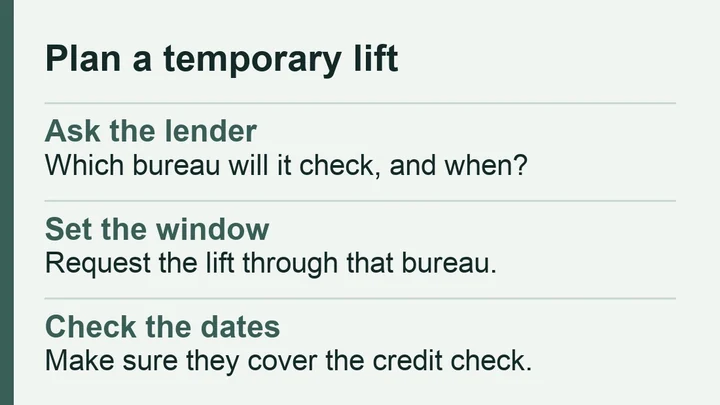
Ask the lender which credit bureau it plans to use and when it expects to pull your report. Then request the lift directly from that bureau. A lift at one bureau applies to the file it holds. If the lender needs more than one report, make a separate request with each bureau it names.
You can remove a freeze or lift it for dates you choose. Both options are free. The CFPB says the bureau must act within one hour of receiving a request by toll-free phone or secure electronic means. Mail requests can take up to three business days after arrival. Pick a temporary window that covers the lender’s credit check.
Credit Freeze vs. Fraud Alert vs. Monitoring
A credit freeze, fraud alert, and credit monitoring all help reduce the risk of identity theft, but they work in different ways. The right choice depends on whether you want to block access to your credit file, add a verification step, or simply get notified about changes.
A credit freeze is the strongest protection. It restricts most lenders from accessing your credit report, which makes it much harder for someone to open new accounts in your name. If you are not planning to apply for credit soon, a freeze is often the most effective option.
A fraud alert is lighter than a freeze. It tells lenders to take extra steps to confirm your identity before extending credit, but it does not lock your credit file. That makes it a good middle-ground option if you want protection without making future credit applications more cumbersome.
Credit monitoring does not prevent new accounts from being opened. Instead, it tracks changes to your credit file and sends alerts about suspicious activity. It is useful for early detection, but it should be treated as a supplement—not a substitute—for a freeze or fraud alert.
A freeze restricts prospective creditors’ access to your file. A fraud alert asks creditors to verify your identity before certain new-credit decisions. Credit monitoring watches for changes and alerts you when it detects them.
What a Freeze Does Not Cover
A freeze is narrow on purpose. It blocks prospective creditors from accessing your credit file, but it does not lock every report a business might use. CFPB says the federal freeze law does not apply to employment, tenant-screening, or insurance requests.

That matters because the three nationwide bureaus are not the whole reporting system. CFPB says other consumer reporting companies prepare reports for employment screening, tenant screening, insurance, check screening, and similar decisions, so freezing Equifax, Experian, and TransUnion does not reach those separate files.
Even where a freeze is active, a few parties can still see the file: creditors on accounts you already hold, certain government entities such as child support agencies, companies you hire to monitor your credit file, and you. A freeze restricts access to your credit file. It does not block every avenue an identity thief can take.
Credit Locks Versus Security Freezes
If a bureau offers a credit lock, read the fee line before the promise. CFPB says credit locks are no more effective than security freezes, and they are often bundled with other paid services. The label may sound different, but the basic protection is not stronger just because it costs more.
A security freeze is the free version of that control. CFPB says you can freeze and unfreeze your credit records for free at Equifax, Experian, and TransUnion, and the freeze is a legal right. It also does not affect your credit scores. If your goal is to stop prospective creditors from seeing the file they use for new-credit decisions, the paid lock does not buy a better result.
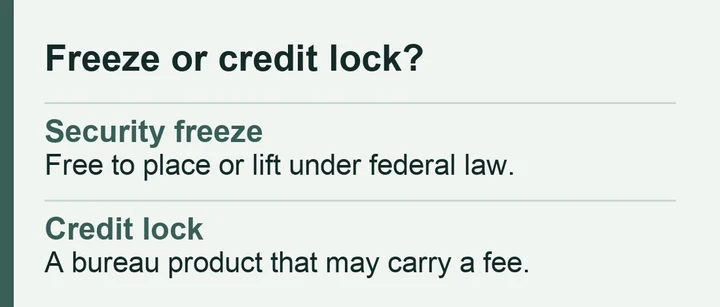
The other tools solve different problems. A fraud alert asks creditors to take steps to verify your identity before opening a new account, issuing an additional card, or increasing an existing limit, and an initial alert lasts up to one year unless removed sooner. Credit monitoring is a fee-based watch service. It can tell you after a change appears, but it does not stop the change itself, so it is not the same thing as a freeze when the goal is to block new credit before you apply.
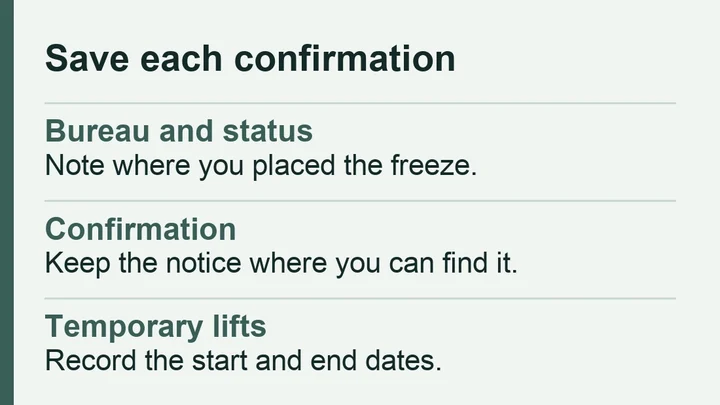
For the application step, place the freeze with each nationwide company separately, then keep the confirmation so you know how to lift it. CFPB says a temporary lift can be set for the period you name, and a removal request by toll-free phone or secure electronic means should be handled within one hour, or within three business days by mail. The freeze leaves a few doors open, including creditors on current accounts, certain government entities, your own requests, and companies you hire to monitor the file. It also does not cover every consumer report used for employment, tenant screening, or insurance, which is why a freeze is a narrow tool rather than a blanket block on every report a lender or employer might check.
Freezing Credit for Protected Consumers
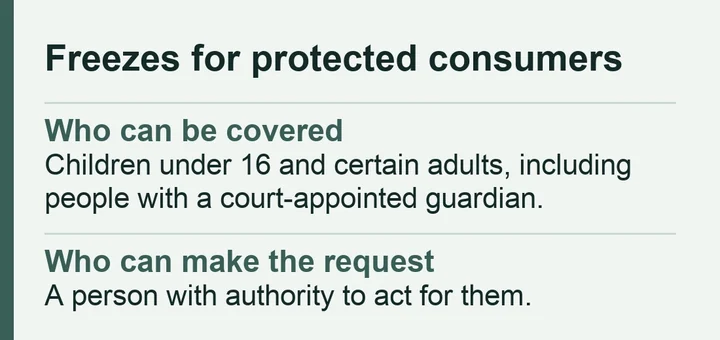
Federal law gives a person with authority a way to freeze a protected consumer’s credit file if the protected consumer is under 16, incapacitated, or has a guardian appointed. CFPB says that person can request the freeze on the protected consumer’s behalf. If no file exists yet, the company must create one solely to freeze it.
That lets the person with authority act before a credit application is filed. If the protected consumer later needs credit, the freeze can be lifted free of charge. CFPB says the lift must happen no later than one hour after a toll-free phone or secure electronic request, or within three business days after a mail request.
The limit is scope. CFPB says the three nationwide consumer reporting companies are not the only companies that collect information. Other consumer reporting companies prepare reports for employment screening, tenant screening, insurance, check screening, and similar decisions, so a freeze on the nationwide file is useful but not a blanket lock on every report that could matter.
Keeping an Eye on Your Reports After You Freeze
After the freeze is in place, do not treat it as a wall around everything. CFPB says a security freeze stops prospective creditors from accessing your credit file, but you can still request and review your own files. Current creditors, certain government entities such as child support agencies, companies you hire to monitor your credit file, and you yourself can still see the file.
A fraud alert works differently. CFPB says creditors who check your report have to take steps to verify your identity before opening a new account, issuing an additional credit card, or increasing the credit limit on an existing account, but a fraud alert does not prevent a lender from opening credit in your name. Credit monitoring is different again. It is a commercial service that charges a fee to watch your credit reports and alert you to changes, usually by email, text message, or phone, and most monitoring services do not prevent theft. They alert you after it has happened.
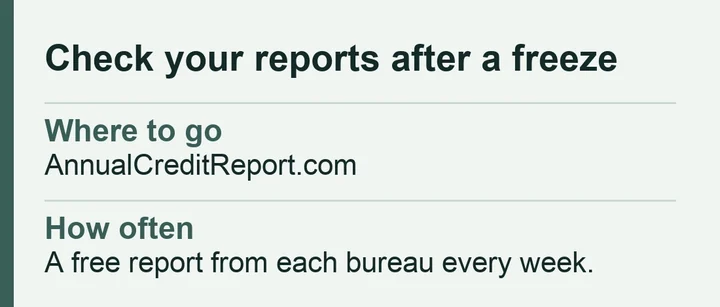
Keep checking the file. CFPB says you can get free credit reports from the three nationwide companies every week at AnnualCreditReport.com, and the FCRA still gives you the right to dispute inaccurate or incomplete information with the reporting company at no charge. A freeze does not change your credit scores.
Do not assume the freeze reaches every report about you. CFPB says other consumer reporting companies also collect information for employment, residential rental housing, insurance, and other decision-making situations, and the federal free-freeze rule does not cover requests for employment, tenant-screening, or insurance purposes. The useful habit is simple: freeze, review, dispute, and keep the rest of your file on your radar.