A $2 bill can be worth more than $100, but the denomination alone won't tell you much. Most ordinary examples are still worth two dollars. The valuable ones need a closer explanation: which issue, which serial number and what condition?
Before treating a bill tucked into a birthday card as a windfall, compare it with a documented sale of the same kind of note. An ambitious online asking price isn't evidence that a buyer paid it.
What Makes One Note Different
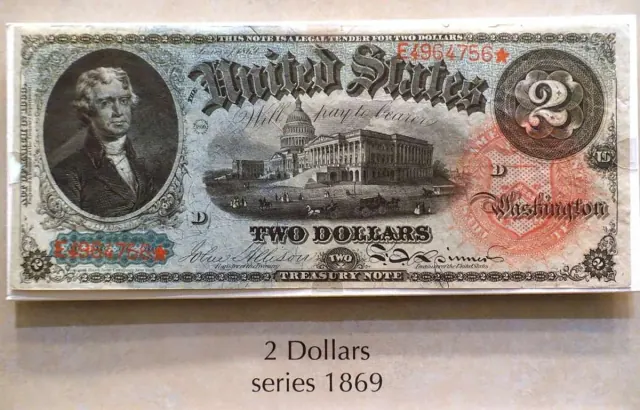
Two bills with Jefferson on them needn't be the same collectible. Read the series and signatures, check the seal and record the serial number. Condition matters too. Those are the details to use when searching auction records, ideally with photographs of both sides beside you. A top price for an early legal-tender issue won't establish a modern Federal Reserve note's value. Nor will a guide's best-condition price necessarily fit a well-used bill.
Unfamiliar Does Not Mean Rare
The Federal Reserve counted about 1.7 billion $2 notes in circulation at the end of 2024. That is a lot of money in a denomination many people rarely receive as change.
The American Numismatic Association says the bills are still produced and can be obtained at banks for face value. A branch may not have them on hand when you ask, but an unfamiliar bill isn't necessarily a scarce collectible.
A Low Serial Number Can Matter
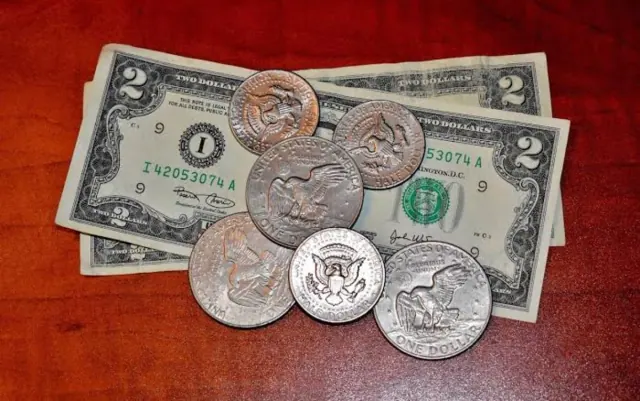
One 1976 note made a good headline. Heritage sold it for $4,000 in November 2023; the American Numismatic Association explained that it carried serial number 00000002 and was in desirable condition. Those details are the point of the story. It doesn't establish a $4,000 price for whatever 1976 bill happens to be in your wallet. For an unusual serial number of your own, check comparable completed sales and pay attention to condition as well.
Hamilton Came Before Jefferson
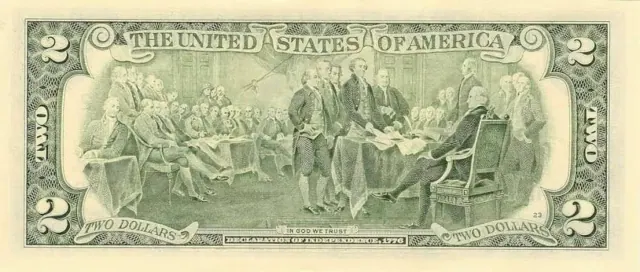
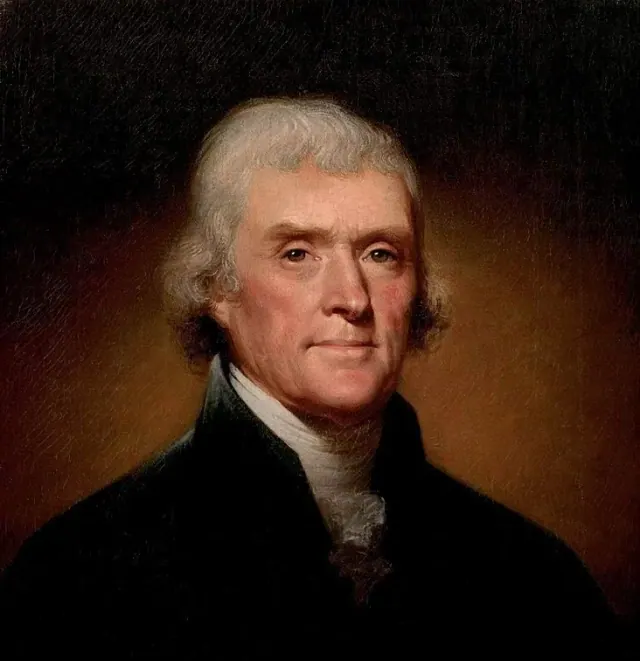
The first $2 notes, issued in 1862, carried Alexander Hamilton's portrait. Jefferson replaced him in 1869. The Bureau of Engraving and Printing's history also records Monticello on the back of the smaller notes introduced in 1928.
The denomination has appeared in different types and designs over its long life. Reducing that history to a choice between Hamilton and Jefferson misses details that collectors use to distinguish one issue from another.
The Familiar Back Arrived in 1976
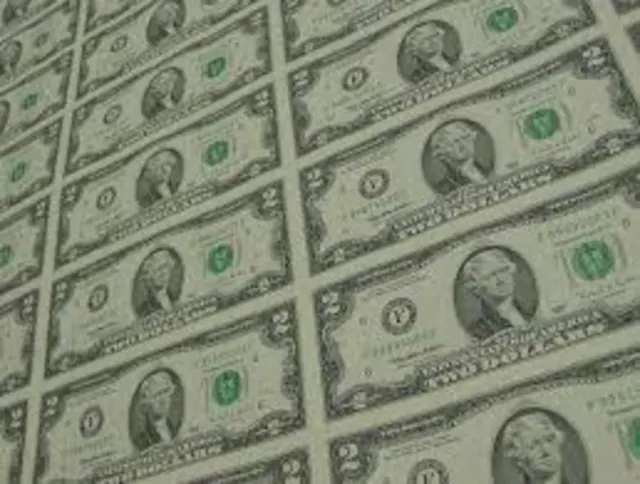
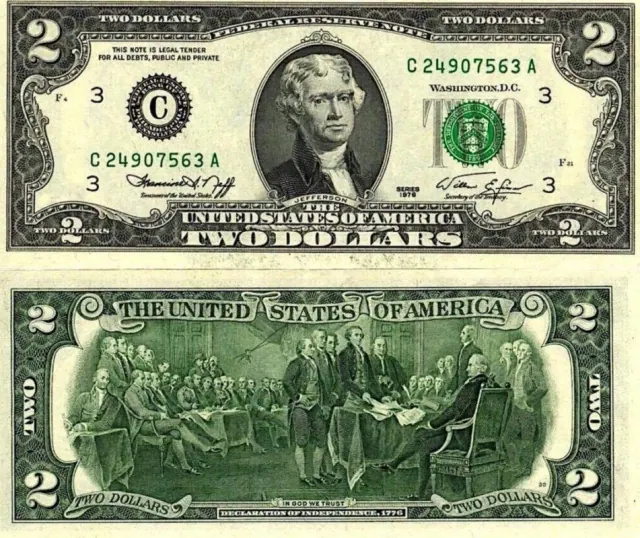
The bicentennial year brought a new reverse to the $2 Federal Reserve note. Its scene came from John Trumbull's painting of the presentation of the Declaration of Independence. The release date, April 13, 1976, marked Jefferson's 233rd birthday; his portrait remained on the other side. That history is part of the bill's appeal. For a price, though, you'll need to identify the actual example. Ordinary 1976 notes aren't rare just because of the anniversary.
A Postmark Is Another Detail to Check
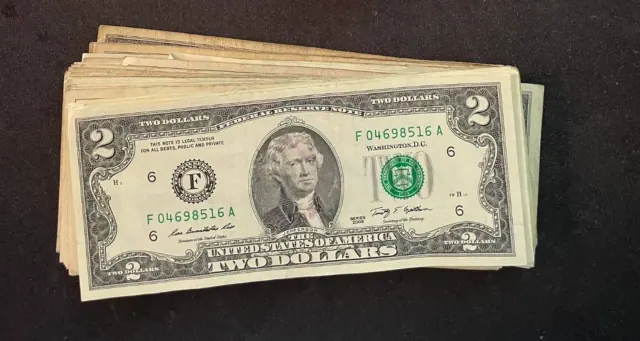
Some collectors marked the denomination's return by having bills stamped and postmarked. Those additions can be interesting, but they don't automatically create a high-value rarity.
A Heritage auction in August 2011 sold a group of 13 postally cancelled 1976 $2 notes for $44 in total. Most bore July 4 cancellations; one also had an April 13 cancellation. That is a historical sale of a particular group, not a current appraisal of every postmarked note.
Keep the Bill in Its Present Condition
An old bill doesn't need a wash or a quick press before someone looks at it. Both can change the paper, and Paper Money Guaranty distinguishes original paper quality from notes that have been processed. Leave it as it is. Use clean, dry hands and a suitable currency sleeve, with no tape holding it in an album. Before buying grading services, ask what they cost; a small premium can disappear into those fees.
Use Sold Prices, Not Wishful Listings
Once you know the issue and condition, compare completed sales. Check whether the published result includes auction fees, and remember that what a buyer paid may differ from what a seller kept.
A dealer's assessment can help with an unfamiliar note. Paid grading is a separate service, not a promise of a profitable sale. For an ordinary modern $2 bill, the cost of certifying it could easily outweigh any premium you hoped to receive.
Clemson Gave the Bill Another Life

The $2 bill has a football story, too. Clemson supporters used Tiger Paw-stamped notes in Atlanta in 1977 to show the economic impact of attending a Georgia Tech game. The tradition continued for away games, according to the university. Finding one may be more interesting than finding an ordinary bill, especially to a fan. But sentimental appeal isn't proof of a collector's premium. A bill can be worth saving for the story without being worth a large amount of money.
BEP: history and designs of the $2 note
Federal Reserve: currency in circulation, 2024
American Numismatic Association: ordinary $2 notes
ANA: the exceptional 1976 serial-number sale
Heritage: 13 postally cancelled notes, August 2011