You've been given another project with no change in hours or pay. That's something concrete to discuss. Calling it "act your wage" gives questions about workload and compensation a catchy label, but the phrase can't tell you what your employment terms require, which time must be paid or how to handle that particular request from your employer.

Start with what the comedy shows
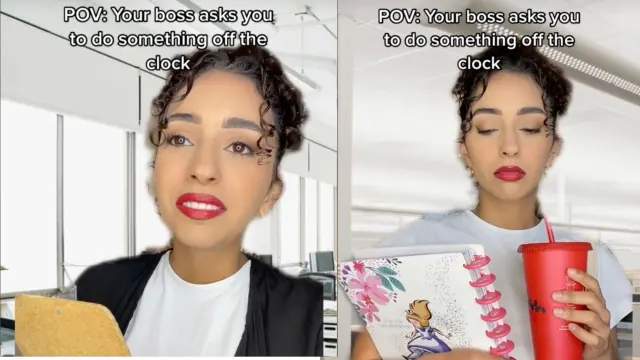
You're seeing archived @saraisthreads images of a character labeled Veronica acting her wage. One caption has a boss requesting off-the-clock work. The creator tagged the original TikTok post as corporate humor. These comedy portrayals don't establish a real employer's conduct, and they aren't a survey of how American employees behave.

Count work that happens after the shift
For covered, nonexempt U.S. employees, the Labor Department's hours-worked guidance says work your employer allows can count as paid time even when it wasn't requested. Its example is finishing an assigned task after a shift. An off-the-clock label doesn't settle the pay question. Make the actual task and time visible instead of treating unrecorded work as a favor.
Check overtime status separately
Your salary or impressive job title alone won't tell you if you're exempt. Applicable duties and pay requirements matter. The federal FLSA generally requires covered, nonexempt employees to receive at least 1.5 times their regular rate for hours worked over 40 in a workweek. State laws or a collective bargaining agreement may add protections. A TikTok slogan can't establish your classification.

Describe the work before debating effort
Suppose you're asked to take over a colleague's weekly report while keeping your existing deadlines. List those assignments and deadlines alongside the hours you have available. Then ask which task takes priority when another is added. You and your manager have something concrete to discuss beyond doing the minimum or debating attitude and ambition.

Ask about the expanded role
In a November 2022 Refinery29 interview, writer Wendy Syfret discussed employees asking for more pay as responsibilities grew. Before your conversation, list the added duties and how long they'll last. Ask about compensation and which existing tasks would leave your workload. That historical interview doesn't provide a pay scale or promise your employer will approve a raise.

Keep safety in the plan
An industrial photograph can't tell you that an entire occupation has adopted a workplace trend. Focus on your actual job. If workloads change, include required safety procedures and handovers in the plan. Address the compensation disagreement directly, with enough detail to make clear what's a pay concern and what's an unfinished or unsafe task.

Write down the proposal
After you've discussed added responsibilities, ask for a written summary of the proposed scope, start date, expected hours and any agreed pay change. Make clear if it's temporary or a permanent change in role. If another task will come off your workload, name it. You'll have a specific record of the agreement to check later.

Separate an opportunity from a promise
You might want the experience a project offers. Still ask what success looks like, what support you'll have and when pay will be reviewed. A possible promotion isn't an agreed increase. Keep that difference clear before you accept an open-ended workload in exchange for a reward nobody has defined for you yet.

Know the protection for pay discussions
If you're covered by the National Labor Relations Act, NLRB guidance says you can discuss pay with coworkers, with or without a union. Employers can't punish covered employees for protected wage conversations. The agency also says you can choose not to discuss your pay. Having the conversation doesn't guarantee you'll get a particular salary outcome.

Check who those rules cover
The NLRA doesn't cover everyone. Public-sector employees, independent contractors and supervisors are among its exclusions, and that's separate from FLSA overtime coverage. Before you treat an online explanation as a rule for your workplace, check the law, the employment relationship and the specific activity involved. Other laws may still apply when one federal statute doesn't.

Keep the hours and pay records
Keep your own notes of hours worked, task requests, pay statements and agreed changes. Covered employers have their own FLSA recordkeeping duties. Your notes don't replace those. If the problem is unpaid work, the Labor Department's Wage and Hour Division can explain its complaint process. For protected pay-discussion concerns, the NLRB is the relevant federal agency.