
How do you connect a company's goals with what its employees want? Panera founder and former CEO Ron Shaich described his approach in a conversation with Adam Mendler, published in August 2024. He put listening first, then linking the business's aims with employees' own. His account offers a starting point for that discussion.
A joke captures a frustration
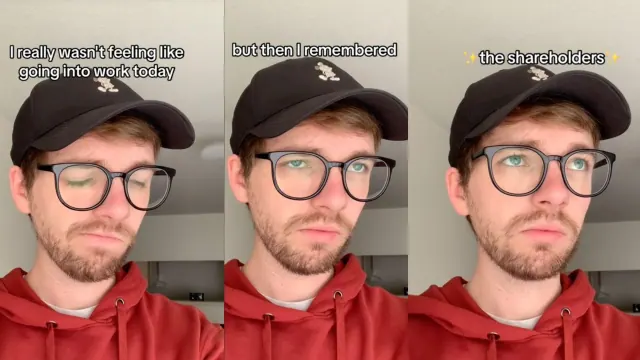
The archived TikTok image accompanying the original story turns a reluctant trip to work into a joke about remembering the shareholders. You can read the sarcasm without treating the post as a workforce survey. One person's comedy doesn't establish how common that feeling is, or how it affects their actual work.
Leave the generational labels out
The original story extended that joke into a claim about younger workers changing their priorities. The image doesn't show a comparison between age groups or changes over time. A more useful starting point for a manager is the person in front of you: ask what they need rather than assigning them a motive based on their age.

Listen before explaining the target
In the Mendler interview, Shaich said understanding what employees care about is part of his job. He described linking what the business wants to achieve with what its people want to accomplish. That asks a leader to learn something before making the pitch. It doesn't require an employee to feel personally excited about earnings per share.

Pay still belongs in the conversation
Purpose doesn't pay a bill. The Surgeon General's 2022 workplace framework includes equitable, stable and predictable living wages alongside dignity and meaning at work. It also calls for involving workers in decisions. You don't have to choose between discussing the value of a job and discussing its pay; the framework places both within workplace well-being.

Support needs privacy and boundaries
The same framework calls for access to mental health care while protecting confidentiality. That is a different responsibility from asking a manager to become someone's therapist. A workplace can explain available support and make it easier to use without making a personal disclosure the price of being heard. Listening to a work concern needn't turn into an inquiry into someone's medical history.

Check the fit on both sides
Shaich also discussed hiring through the direction a person wants their life to take and the work the organization needs done. His account puts the fit on both sides. For a hypothetical employee seeking more responsibility, a useful discussion could concern the tasks and support involved. That's more specific than asking them to adopt the company's ambitions as their own.

Put your own priorities on paper
In an October 2023 McKinsey interview, Shaich described reviewing where he wanted to be in future years, then working backward to a plan. He applied that process to his life and his companies. If you try that exercise, write down the decisions it would change. A goal is easier to discuss when people can see what you're proposing to do.

Give people a way to respond
The federal framework centers worker voice and equity. Its recommendations include explaining decisions, recognizing contributions and providing relevant feedback. Those offer practical things to discuss with a team. An invitation to speak can be followed by a clear account of what will change, what needs more work and what the organization hasn't agreed to do.

Connect the numbers to the work
In his October 2023 ExCo interview, Shaich argued that value creation follows from building a better business and a better alternative for customers. That puts attention on the work behind a financial result. He described where he believes leaders should direct their effort.

Keep room for new ideas
Shaich's McKinsey conversation distinguished discovering what customers need from delivering efficiently. He warned that an organization can become good at repeating yesterday's offer while missing change. In that account, the leader's task includes both. Asking people to meet an established process and asking them to help improve it are different conversations worth making time for.

Match the calendar to the promise
ExCo's interview also records Shaich's advice to identify a few priorities and organize time around them. You can use that as a concrete check on a leadership promise. If listening to your team matters, where does it fit in the working week? Name the next conversation and the issue it should resolve.